IICRO 2024
Tracks
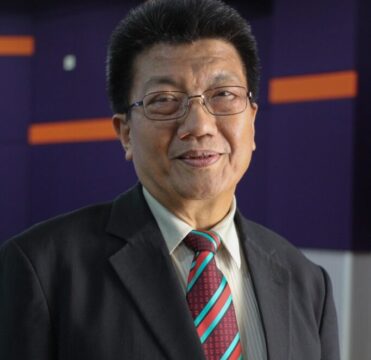
- International Islamic University Malaysia, Malaysia
Abstract
The take a look at of nature and foundation of the brain which additionally issues with the functioning of the nervous system, frequently the use of the neurophysiological or molecular organic system that is the subspecialty of both the frame shape and Neuroscience as awesome regions of brain represent indicators to distinct elements of the body. This concern is counted need to deliver an extraordinary description of the revolutionized anatomy of the nervous system, the motor reaction manipulates neurons, perception processing, and reminiscence neurons. Neurology conferences discussions also can be made in neuromuscular physiology, neural mechanisms of higher nerve interest and troubles of Neuroscience also may be conferred.

- International Islamic University Malaysia, Malaysia
Abstract
The swift digitization of information has not only transformed conventional library services but has also ushered in a new era of integrating digital resources, automation, and cutting-edge information retrieval systems. This abstract delves into the profound influence of technology on the organization, accessibility, and dissemination of information, underscoring the pivotal role that libraries play in adapting to these dynamic changes. Furthermore, it sheds light on the escalating significance of data management and analytics within the Library and Information Science (LIS) domain, where libraries assume a central role in the curation and utilization of extensive datasets. The intersection of LIS with burgeoning fields such as data science and artificial intelligence is explored, illustrating the vast potential for advanced information discovery and knowledge extraction. This overview offers a snapshot of the present state of Library and Information Science, accentuating the transformative impact of technology, the evolving responsibilities of librarians, and the persistent challenges that demand continuous research and innovation in the field.
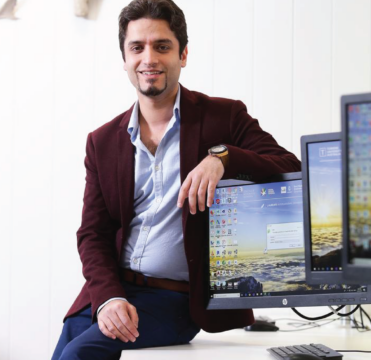
- Torrens University Australia, Australia
Research Member:
1. Ankit Jain – Senior scientist from Facebook United States
2. Marviola Hardini, S.Kom., MIEEE – University of Raharja
3. Fitra Putri Oganda, S.Kom., MIEEE – University of Raharja
4. Dr. Sudaryono, SP., S.Pd., M.Pd. – Jakarta State University
5. Thufail Rafii Habibillah, S.Ds – University of Matana
6. Allya Nissa Daswar, S.Si – State University of Padang
Artificial Intelligence Includes:
1. AI and Creativity
2. Data Mining
3. Industrial Applications of AI
4. Intelligence and Cybersecurity
5. Big Data
Abstract
Artificial intelligence (AI) seeks to get computers to do things the mind can do, which involves psychological skills such as perception, association, prediction, planning, and motor control. Intelligence is a rich, structured space of diverse information processing capacities. AI has developed into a prevalent technology in the world. It is a simulation of natural intelligence in a machine programmed to study and imitate human actions. Therefore, AI uses many different techniques, handling many different tasks. ‘What is Artificial Intelligence?’ describes the two main goals of AI: one to be technological and the other to be scientific. It looks at the influence of AI on life sciences and philosophy. Can an AI system have intelligence, creativity, or real life? It also considers how AI started, virtual machines, the main types of AI, and cybernetics. AI works by combining large amounts of data quickly, iterative processing, and intelligent algorithms, allowing software to learn automatically from patterns or features in the data. AI is a broad field of study encompassing many theories, methods, technologies, and critical subfields.
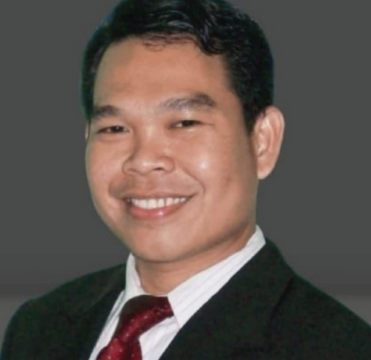
- University of Raharja, Indonesia
Abstract
Lecturers are entitled to get promotions and awards in accordance with their academic performance. Service of teaching and learning process of quality and professional will affect hope and feeling of satisfaction for students to the spirit in following the lecture. Performance appraisal according to the favorite lecturer selection guidelines are (a) giving the syllabus at the beginning of the semester, (b) teaching on time, (c) mastering the taught material, (d) correcting assignments and timely grades, and (e) serving academic guidance students well. Lecturers who can be elected are a lecturer who has given lectures on all courses in the department for at least two semesters and are not currently following the learning task and has provided academic guidance services for at least two semesters.

- University of Raharja, Indonesia
Abstract
Educational technology is the ethical study and practice of facilitating and improving learning performance by creating, using or utilizing, and managing appropriate technological processes and resources. The study and ethical practice can be through the creation, use, regulation of processes, and technological resources. Educational Technology, especially in the University environment, is a means of lighting and supporting all needs in this modern era. This pathway is a form of increasing motivation in building an educational environment and increasing utility for the development of science and technology in higher education so that it is in harmony with the Education 4.0 ecosystem.
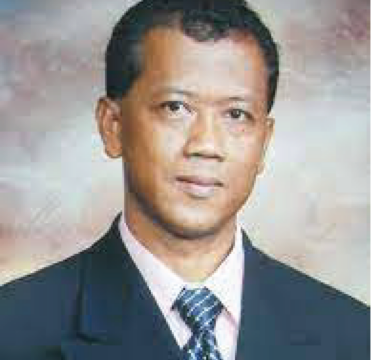
- University of Raharja, Indonesia
Abstract
Renewable energy is energy that comes from natural sources such as sunlight, wind, rain, geothermal, and biomass. In 2006 around 18% of world energy consumption came from renewable energy sources and this number tends to increase from year to year. Currently, there is no available technology that can take over energy production from fossil fuels, but some of the technologies mentioned above are very promising and have the potential to be developed in Indonesia. The need for electricity in the community, especially in the University environment, is a means of lighting and supporting all requirements in the modern era. Renewable energy has a significant role in meeting energy needs. This track is a form of increasing motivation in building an educational environment in support of the Renewable Energy-Based (REY) government program, which can increase utility and relevance while at the same time aligning the development of science and technology in higher education to align with the Education 4.0 ecosystem.

- Wonkwang University, South Korea
Abstract
Blockchain is a technology that is used as a storage system or digital data bank connected to cryptography. Its use is inseparable from Bitcoin and other Cryptocurrencies. Blockchain empowers decentralized systems by bringing together the most incompatible unstructured entities and integrating them. The decentralized storage system is armed with smart contracts that act as layers of control, featuring impenetrable security, immutability, traceability, and transparency. Because centralized storage has inherent problems, such as a single point of failure with multiple possible data breaches, a lot of duplicated data being stored repeatedly in one location, and a lack of trust in third parties for data stored in centralized storage. The interesting thing about this system is that it does not require transaction fees, such as infrastructure. Based on this, we can conclude that it is the easiest and simplest way to convey information quickly, securely and automatically. As an innovation, this technology does have several advantages. With a system in which each block can check each other, the possibility of errors is even less. This song aims to publish a series of special editions on Decentralization integrated into the Industrial Revolution 4.0.

- Universitas Bina Bangsa, Indonesia
Abstract
Expert systems were first developed by the AI community in the mid-1960s. The expert system that first appeared was the General Purpose Problem Solver (GPS) developed by Newel & Simon. An expert system is a system that tries to apply human knowledge to computers, so that computers can solve problems as is usually done by experts, and a good expert system is designed to be able to solve a particular problem by imitating the work of experts. Experts referred to here are people who have special skills who can solve problems that cannot be solved by ordinary people. Have the ability to work with incomplete and uncertain information. Users can respond with ‘don’t know’ or ‘not sure’ answers to one or more questions during the consultation and the system will still provide answers. The system itself is a software package or computer program package intended as a provider of advice and assistance in solving problems in certain areas of specialization such as science, engineering, mathematics, medicine, education and so on.

- University of Raharja, Indonesia
Abstract
Digital business is one type of service that uses advanced technology when making a product or in the marketing process creates competitive advantage through creating unique value for customers by means of digital transformation. Is not only related to selling a product without its form, such as software. All types of businesses whose product sales are done online, be it through websites or applications can also be in the form of goods or services, for example the ability to provide interesting writing, then you can become a content writer. This expertise can be used as the core of the business that will be carried out. This development is rapidly at this time due to the fast internet network as well. As long as internet users are increasing and internet access is easy, this business will always have the potential to be cultivated.